
Moscow Metro: Underground Palaces, a Secret Bunker, and a Wish-Granting Dog
Let’s get one thing straight: I’ve ridden the subway in New York, the Tube in London, and the Metro in Paris. Don't get me wrong, they get the job done. But usually, that job involves dodging rats, enduring questionable smells, and staring at peeling paint. It is purely utilitarian.
Moscow is a completely different universe.
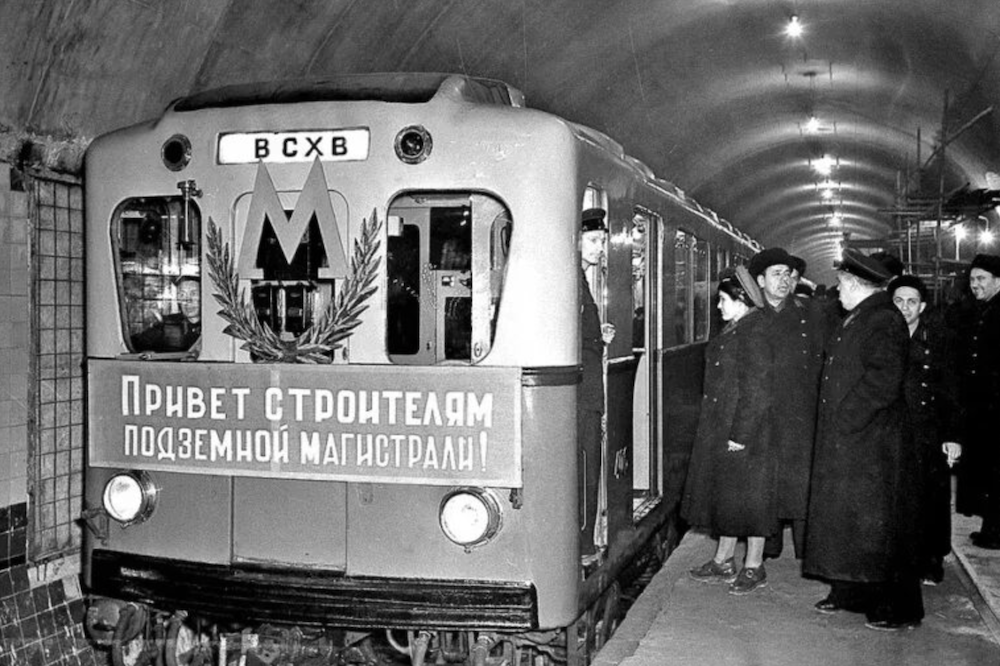
When I first descended into the Moscow Metro, I honestly thought I had taken a wrong turn and walked into a museum. There is no trash. There is no graffiti. Instead, there are marble floors so clean you can almost see your reflection, massive crystal chandeliers, and mosaics. In Moscow, people don't just go underground to commute; they go underground to experience art.
But don’t let the beauty fool you—this isn't just a tourist attraction. It is a technological beast.
To really understand the scale, you have to look at the numbers. While the system opened back in 1935, what we are seeing now is a completely different pace of construction. Since 2011 alone, the network has expanded by almost 1.7 times.
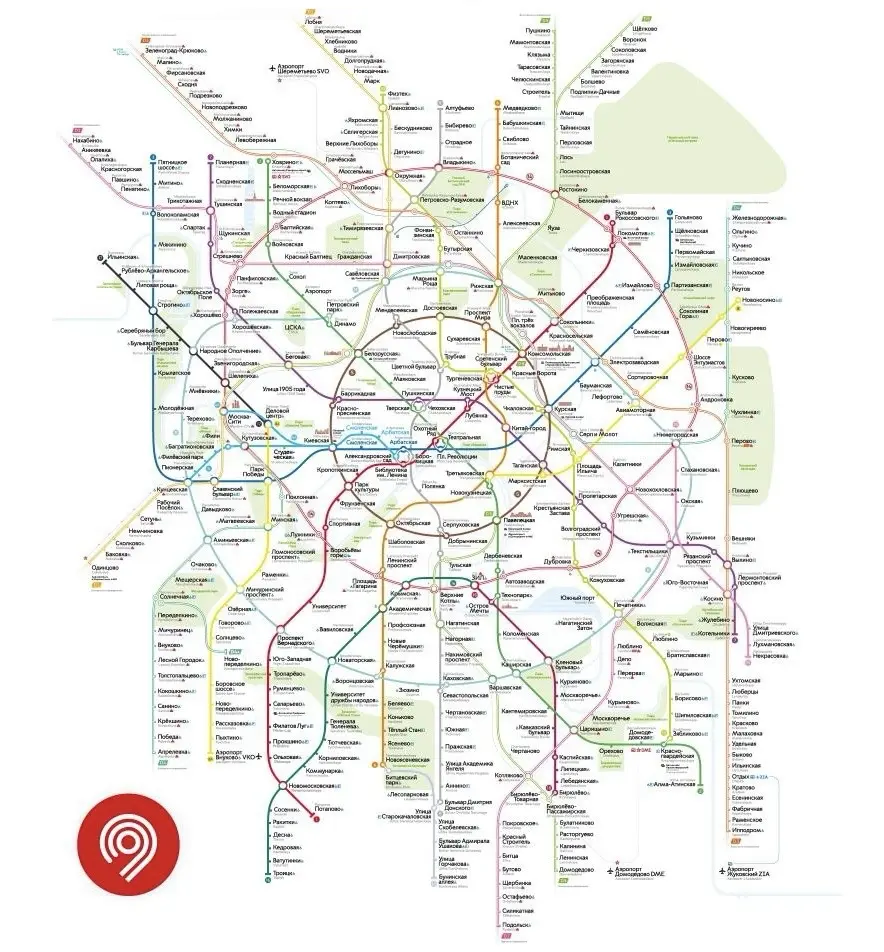
Today, with over 560 kilometers of track (including the MCC circle line), it ranks as the longest metro system in Europe and the 8th longest in the world. The density is just as impressive: 15 years ago, about 70% of Muscovites lived within walking distance of a station—today, that number is over 90%. Basically, no matter where I find myself in this massive city, a subway entrance is usually nearby.
The passenger numbers are equally serious. The Moscow Metro consistently stays in the global Top 5, recording approximately 2.5 billion trips per year. It stands shoulder-to-shoulder with the Asian giants:
- Tokyo (~10.5 billion)
- Shanghai (~3.9 billion)
- Beijing (~3.7 billion)
- Moscow (~2.5 billion)
- Guangzhou (~2.4 billion)
So, yes, it’s beautiful. But it is also the absolute best way to survive the Moscow traffic.
Palaces for the People
So, why does a subway station need to look like a royal opera house?
When the first lines were being built in the 1930s, the philosophy was radically different from anything in the West. In London or New York, the subway was just a dark, noisy tube to get you from Point A to Point B. In the Soviet Union, the goal was ideological.
They called it the concept of "Palaces for the People."
The idea was simple but powerful: the ordinary worker, tired after a long shift at the factory, shouldn't descend into a dark, depressing hole. Instead, they should descend into a space of light and grandeur. They wanted every citizen to feel like an aristocrat. If the tsars had palaces above ground, the people would have palaces below it.
That is why you see the Stalinist Empire style everywhere: high ceilings, heavy bronze statues, and walls lined with marble and granite brought from all corners of the country. The lighting was crucial, too. Those massive chandeliers weren't just for decoration; they were designed to serve as "artificial underground suns" so that people wouldn't feel the oppressive weight of the earth above them.
But here is the cool part: this tradition didn't die with the Soviet Union. Even today, as the network expands at a crazy speed, the city refuses to build boring "concrete boxes." Modern stations are just as ambitious, though the style has shifted from heavy imperial luxury to high-tech futurism.
Every new station still has a specific theme and a "message."
- Some look like spaceships (like the new Gagarin-themed stations).
- Others are tributes to Russian literature or nature.
- Architects are still competing to create unique identities for every stop.
So, when you travel through the Moscow Metro, you aren't just moving through space; you are moving through different eras of architecture and design. It is a gallery where the exhibits are the walls around you.
The Top 5: A Visual Feast
Asking me to pick the best metro stations in Moscow is like asking a parent to pick their favorite child. It’s an impossible task with an asterisk. Every station has its own soul, history, and vibe.
If you are short on time and want to get the absolute maximum "Wow Effect," these are the five you simply cannot miss.
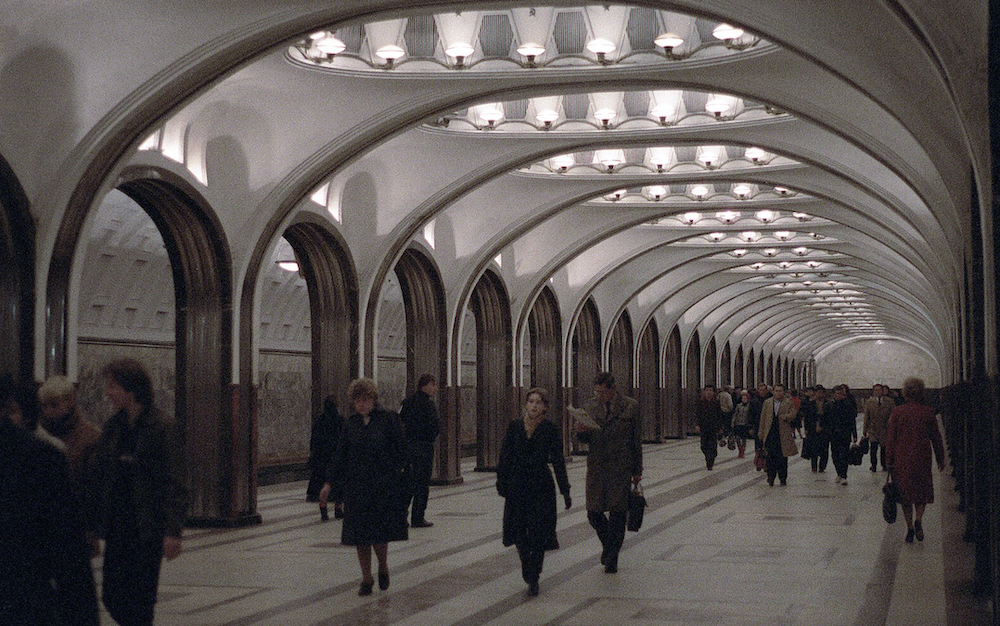
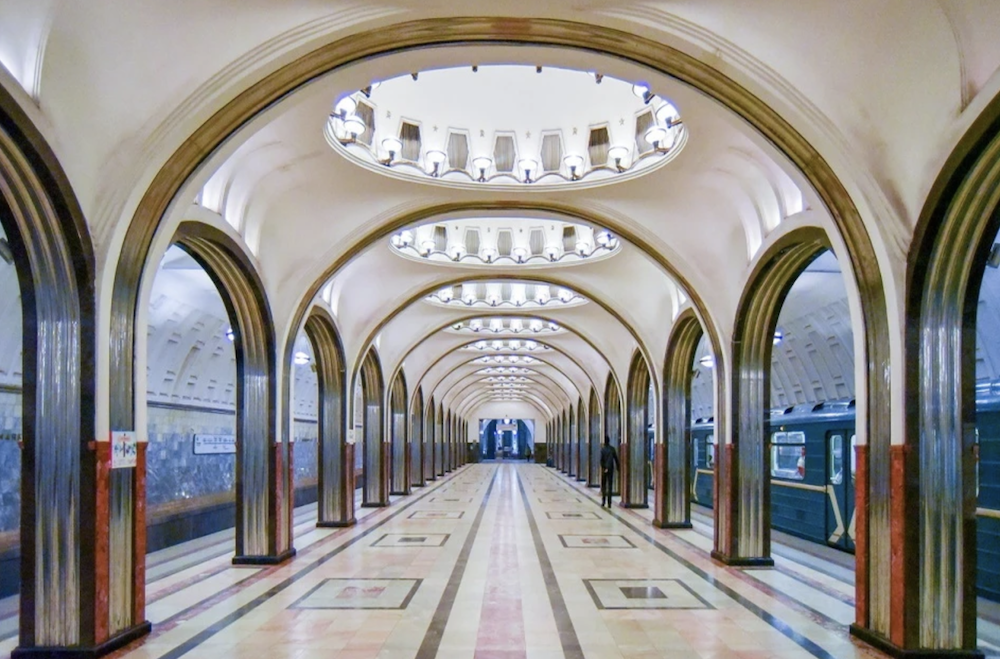
1. Mayakovskaya (The Futurist Masterpiece)
Style: Stalinist Empire meets Art Deco.
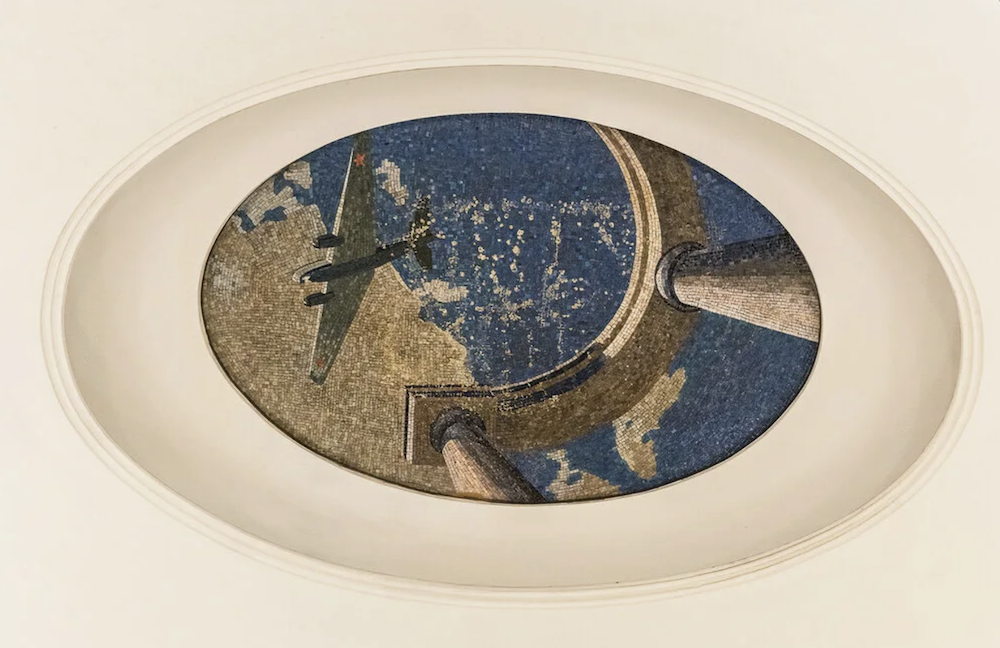
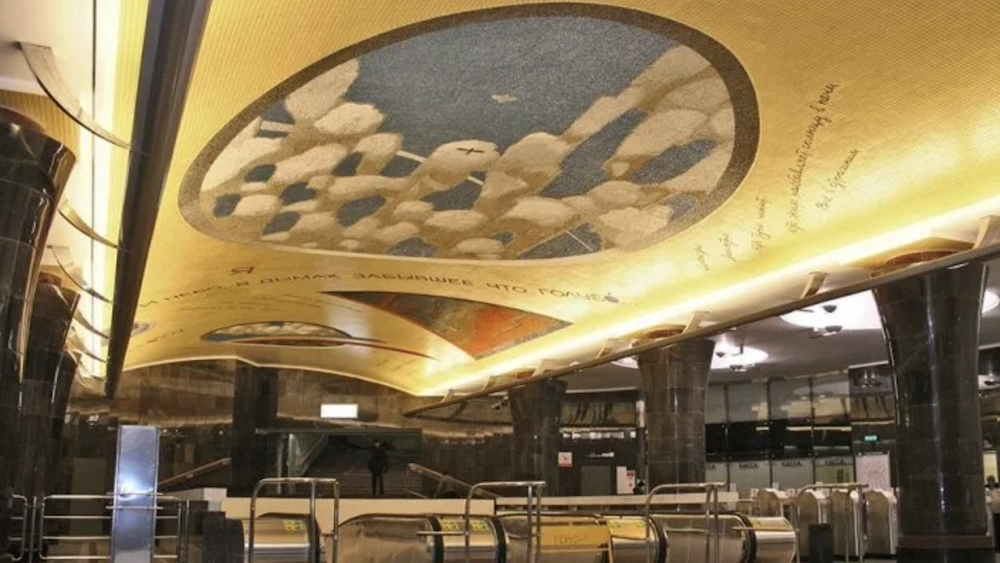
Why it’s special: This is my personal favorite. It feels airy, futuristic, and oddly poetic. Instead of heavy walls, you have slender columns wrapped in stainless steel and semi-precious "Orlets" stone. Look up, and you’ll see 34 niche mosaics depicting "24 Hours in the Land of the Soviets."
History: In 1939, this design won the Grand Prix at the World’s Fair in New York. Later, during WWII, it served as a bomb shelter—Stalin even held a meeting of the Moscow Soviet right here on the platform while air raids sirens wailed above.
Try this:
There is a cool acoustic trick here. If you stand at one column and whisper into it, your friend can hear you perfectly at the column on the opposite side of the arch.
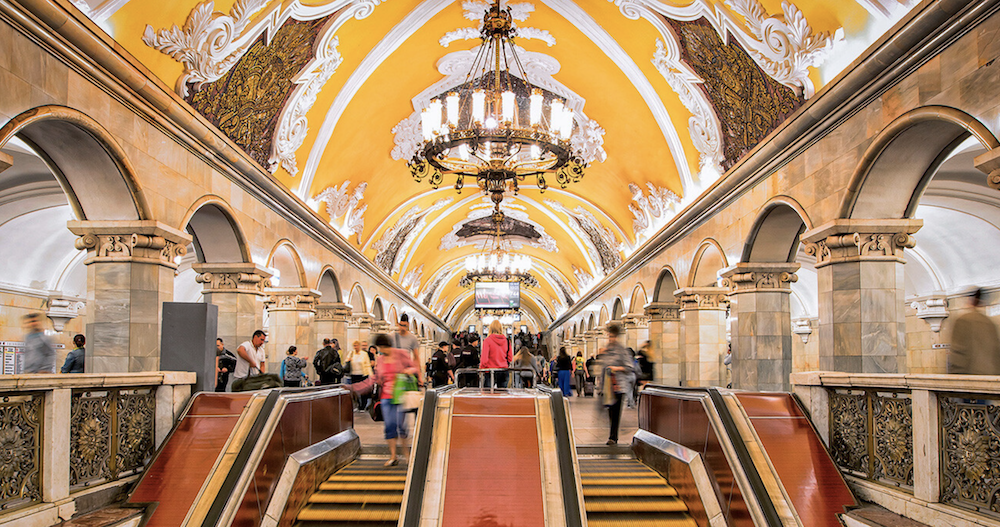
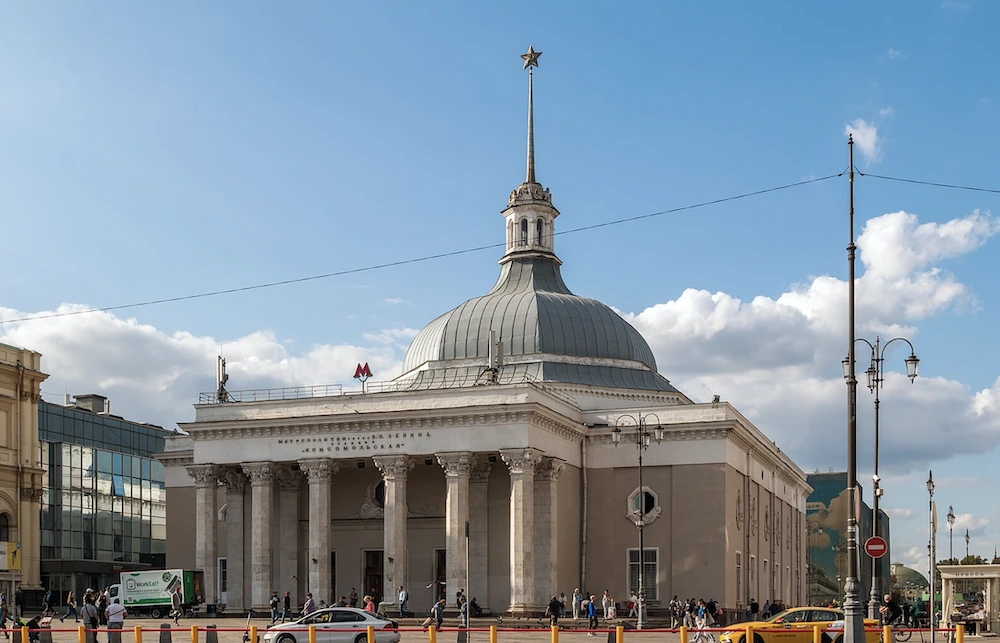
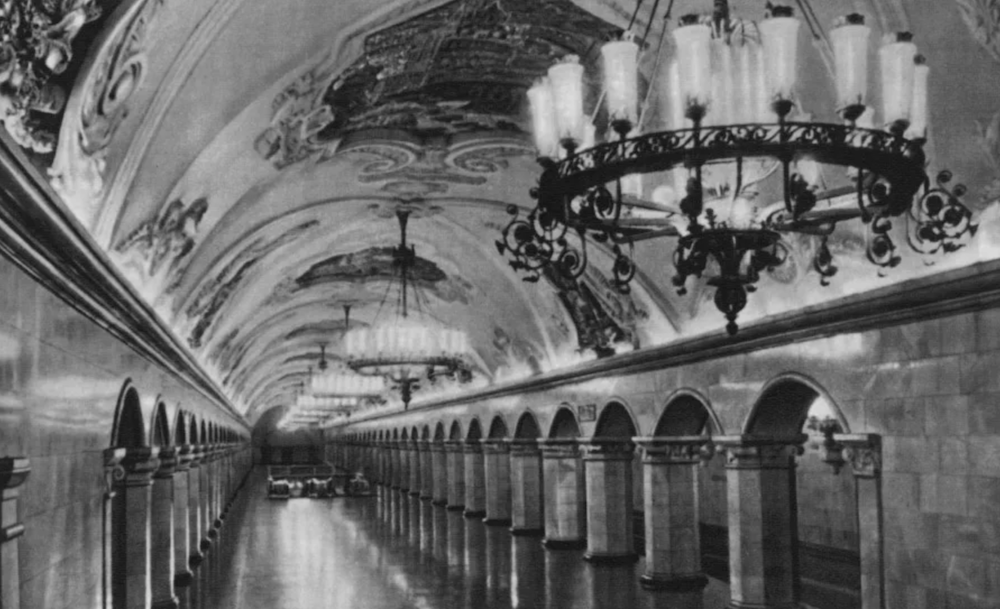
2. Komsomolskaya (Ring Line) (The Baroque Ballroom)
Style: Unapologetic Imperial Luxury.
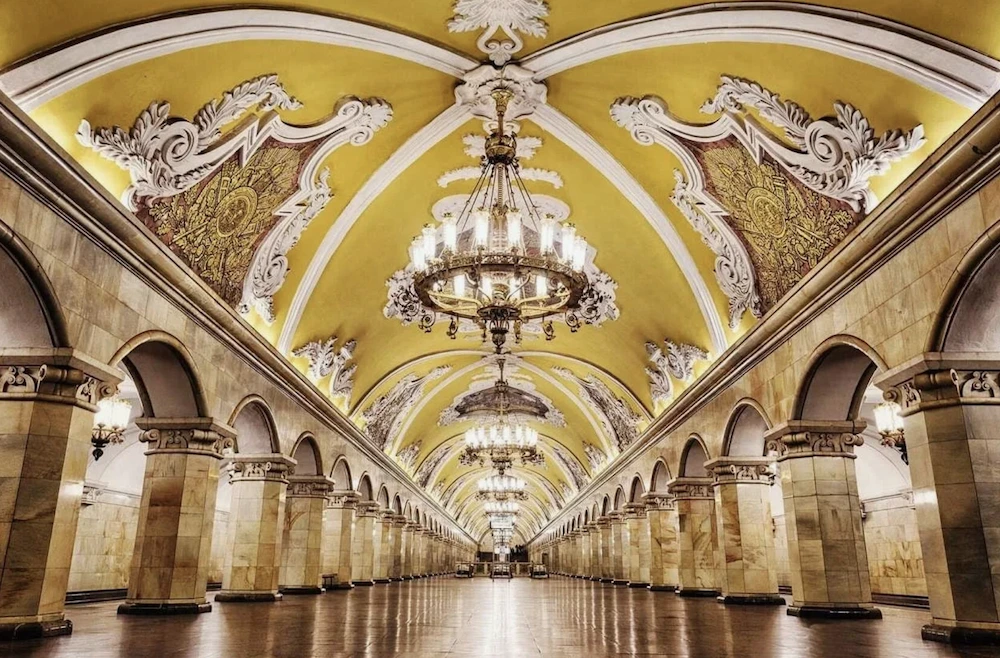
Why it’s special: This is the "Gateway to Moscow" (located next to three major railway stations), and it was built to impress visitors immediately. It features 68 octagonal columns and massive chandeliers that look like they were stolen from a cathedral.
The Ceiling: The yellow ceiling is covered in mosaics that tell the story of Russian military history—from ancient knights to soldiers at the Reichstag. It is sheer gold, marble, and grandeur.
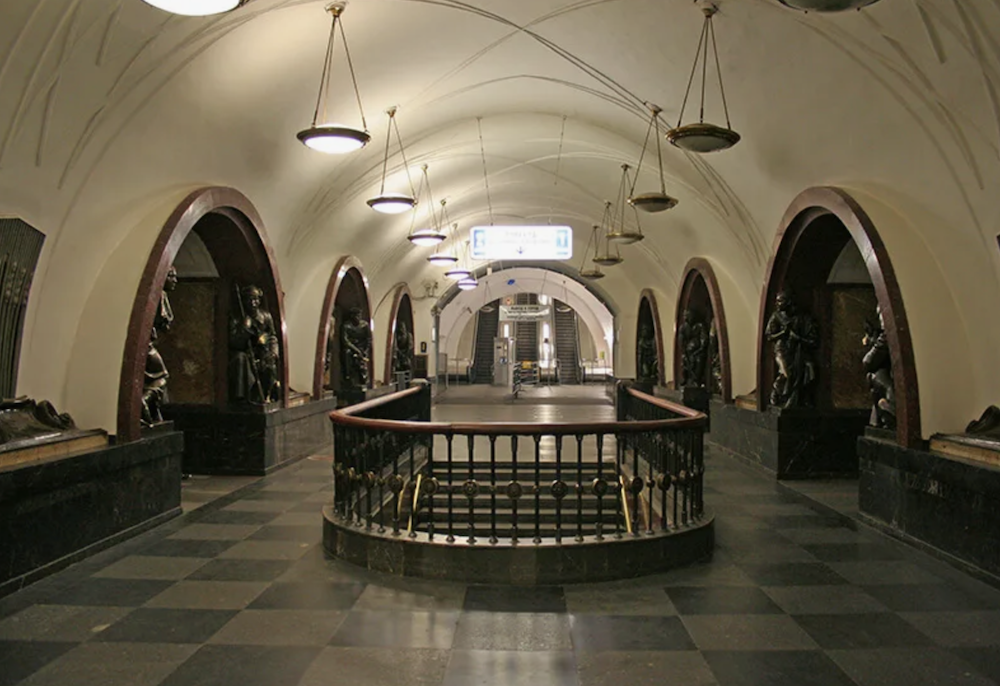
3. Ploshchad Revolyutsii (The Bronze Heroes)
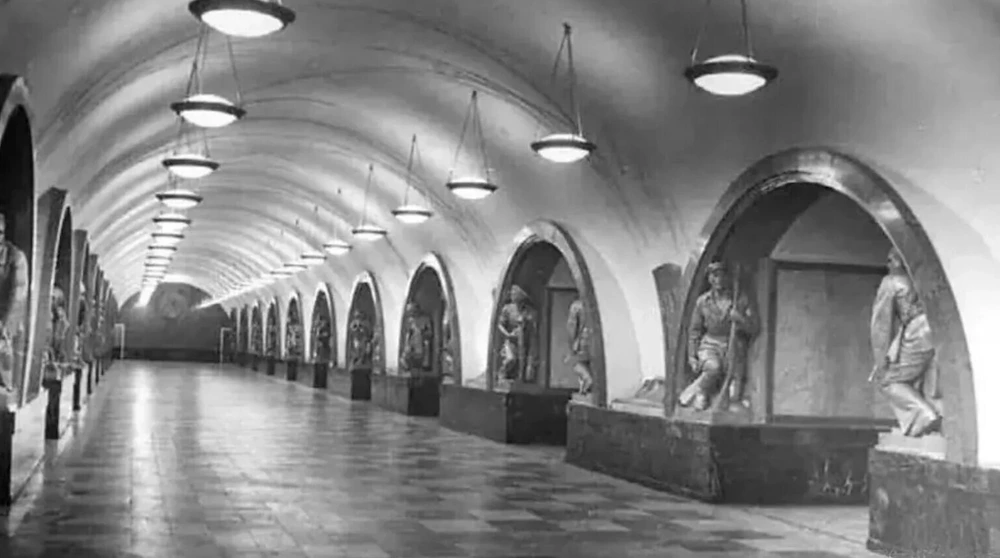
Style: Socialist Realism.
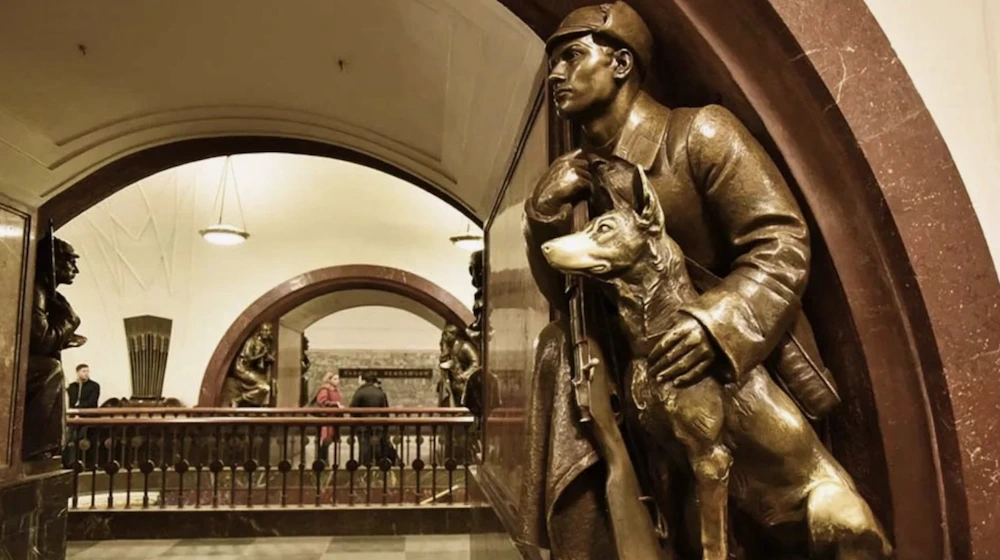
Why it’s special: This is probably the most "Instagrammable" station in the old center. The arches are guarded by 76 life-sized bronze sculptures of Soviet people: soldiers, farmers, athletes, and writers.
The Ritual: You will notice that the nose of the bronze dog (sitting next to the Border Guard) is polished to a shine. Rubbing it brings good luck. It’s a city-wide superstition—give it a rub!
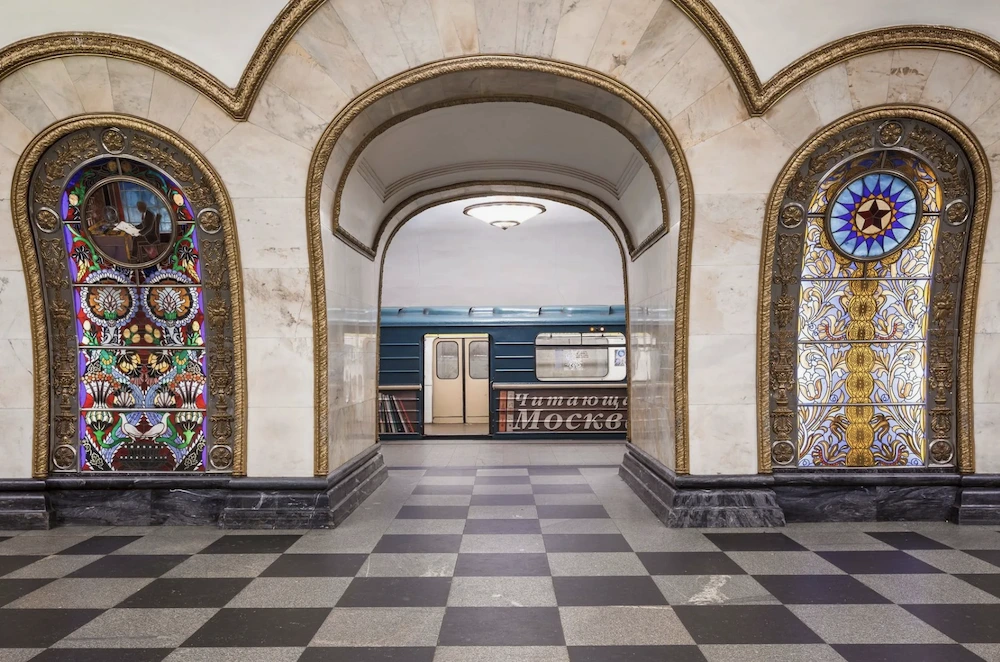
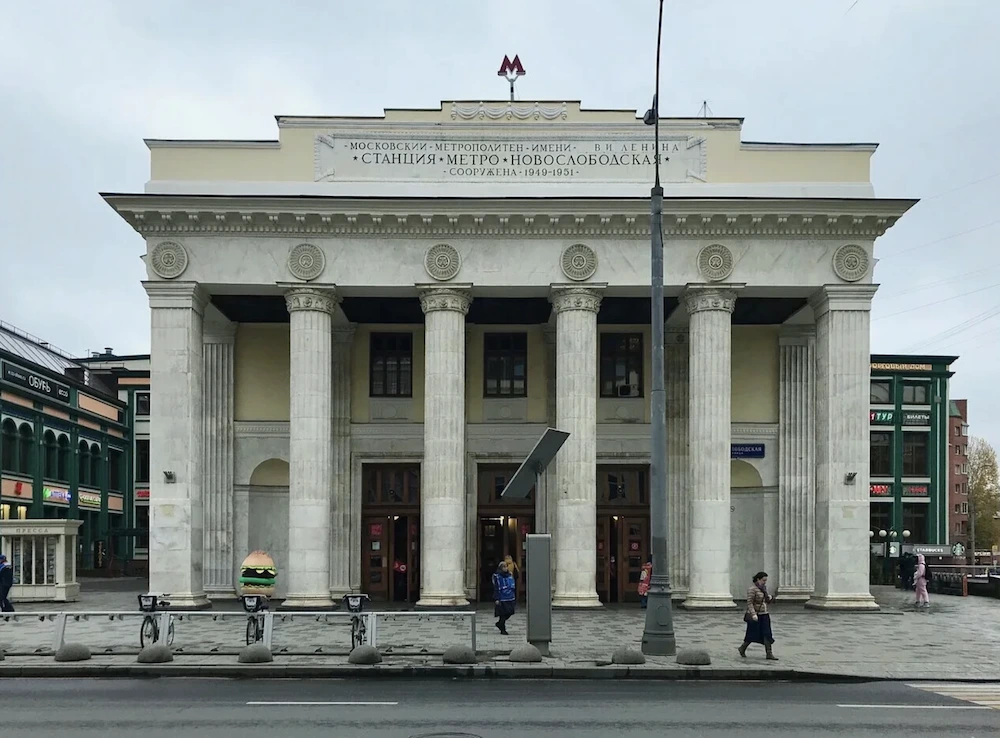
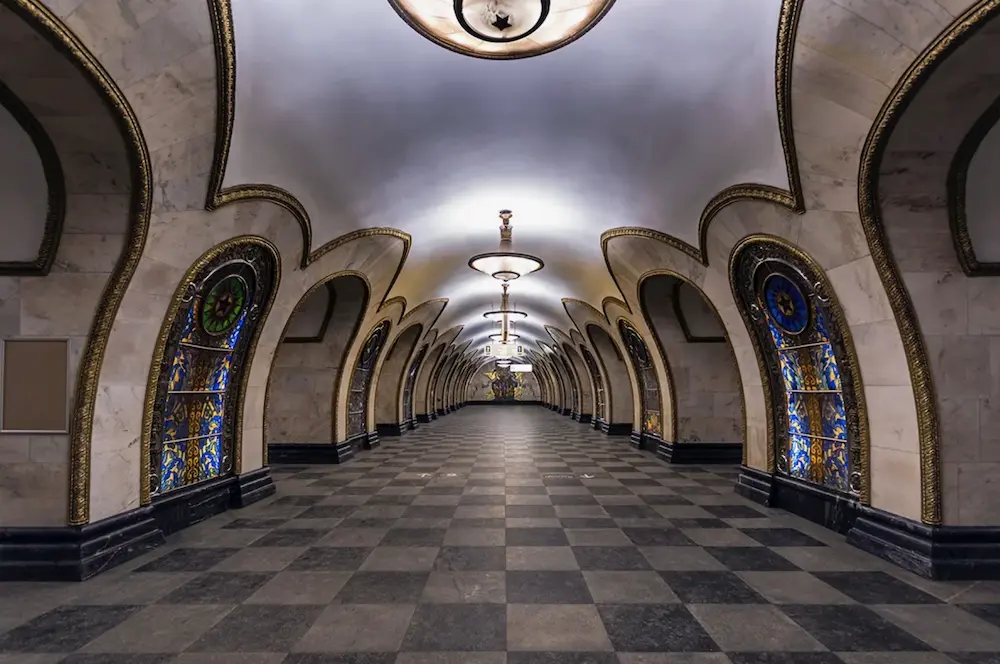
4. Novoslobodskaya (The Stone Flower)
Style: Stained Glass Magic.
Why it’s special: This station feels like an underground church or a fairy tale. The pillars are illuminated from within by 32 stained-glass panels, which were actually crafted by artists in Riga (Latvia).
Vibe: The light here is warm, soft, and almost meditative. It’s one of the few places in the bustling city where you just want to stand still and stare.
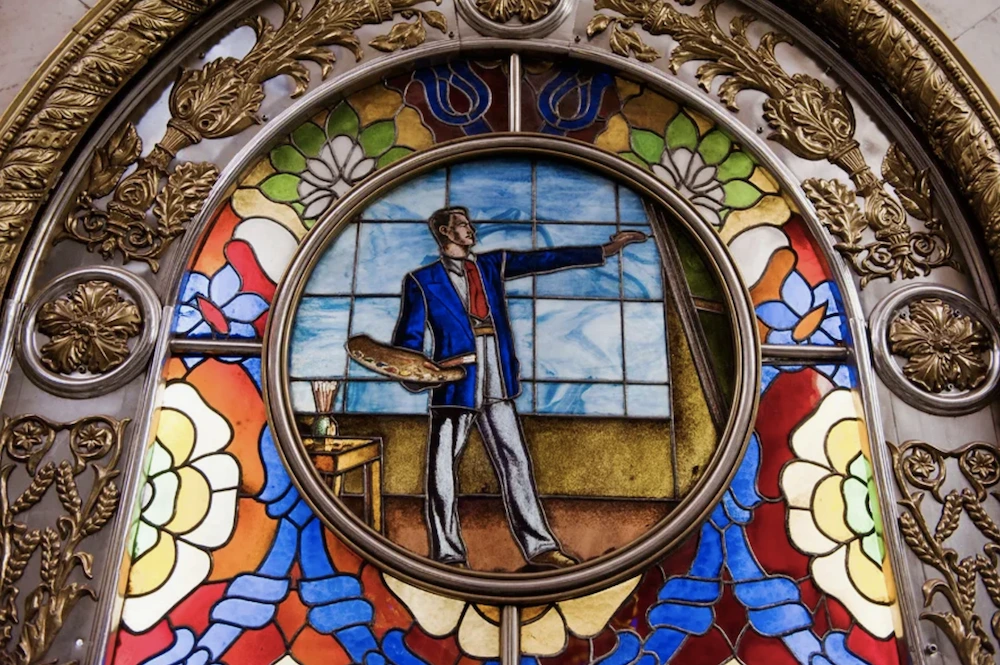
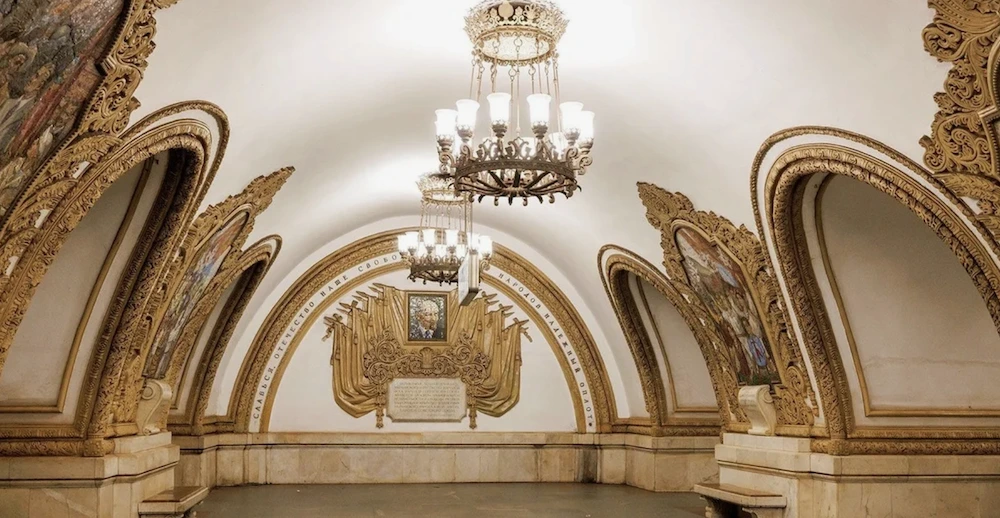
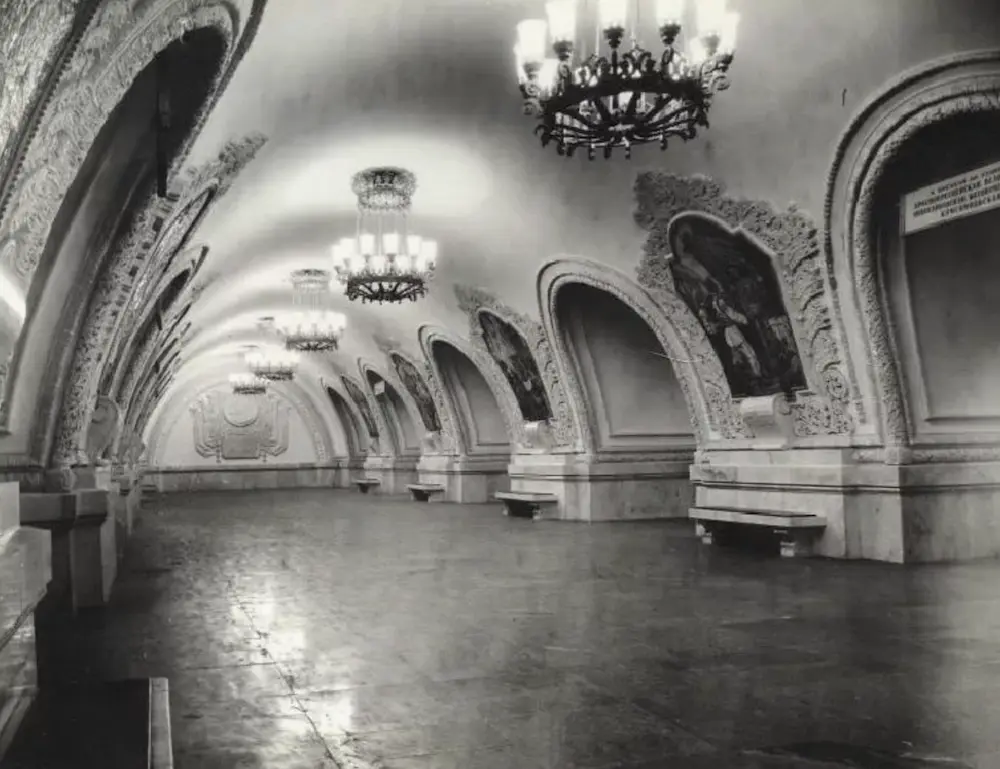
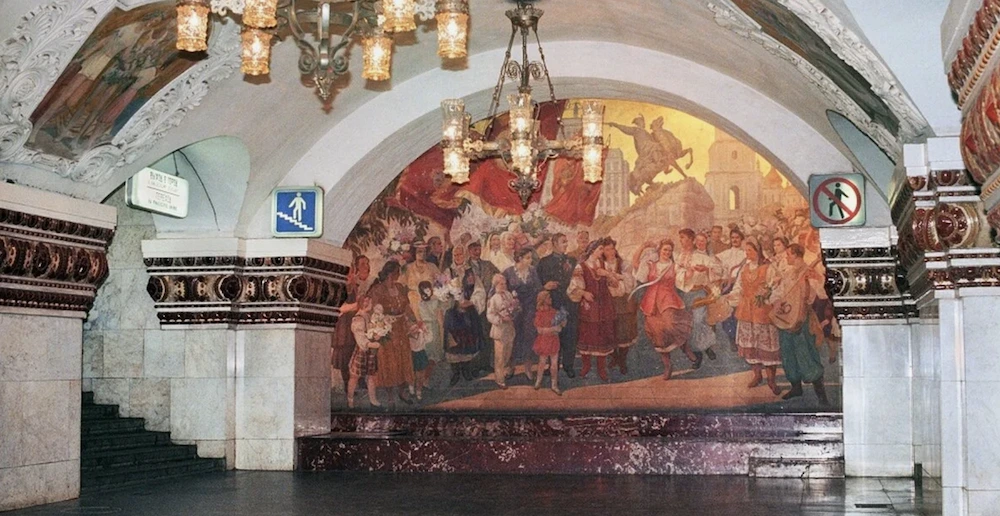
5. Kievskaya (Ring Line) (The Celebration)
Style: Festive & Ornate.
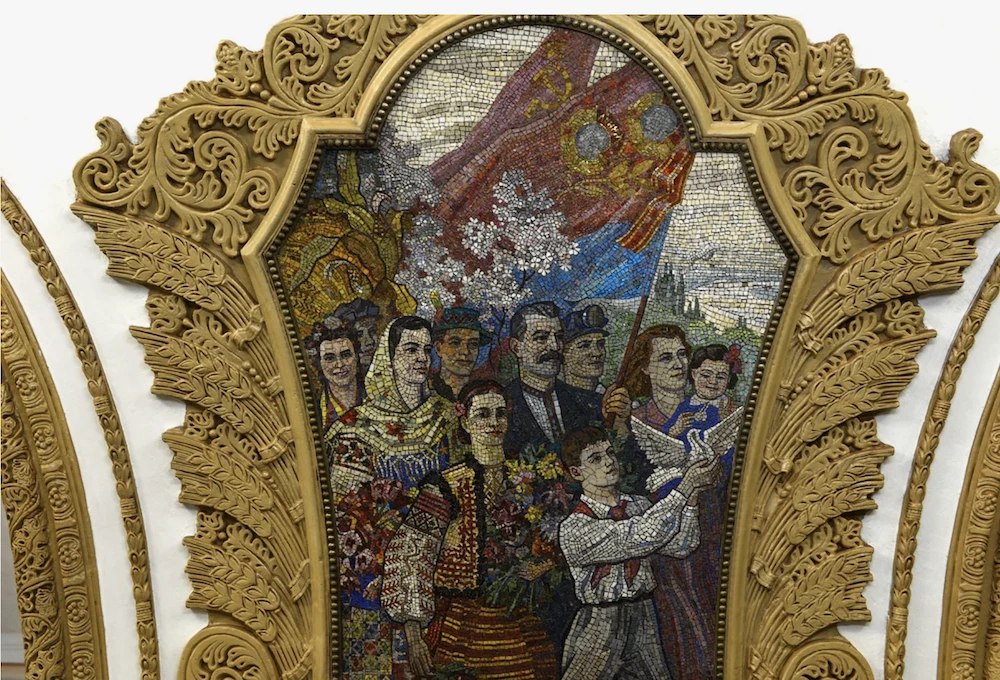
Why it’s special: It feels like a celebration. White marble, intricate gold frames, and incredibly detailed mosaics depicting the friendship between Russia and Ukraine. It is bright, elegant, and looks like a postcard from the past come to life.
However, the metro isn't just a glorious time capsule. The architecture has evolved along with the city. The newest stations have swapped heavy gold and stucco for glass, polished steel, and light. They offer a different kind of beauty—sleek, modern, and bold.
Here are the contemporary stops that really stood out to me
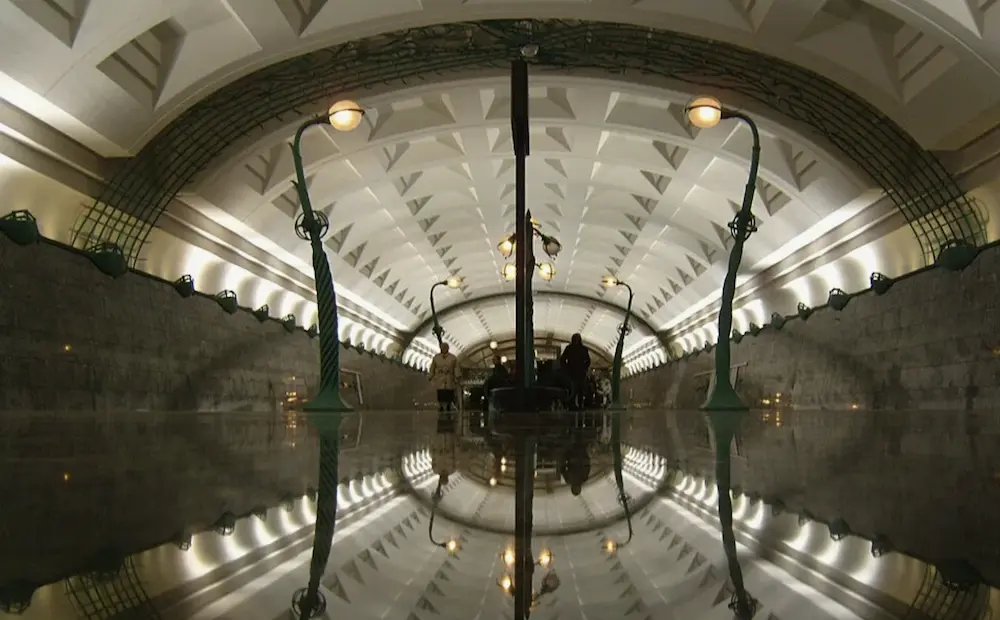
1. Slavyansky Bulvar (The Enchanted Forest) If you are a fan of the Paris Metro art nouveau style, you will love this. It feels like a giant, metallic greenhouse or an enchanted forest. The station is filled with green metal "trees" that curve up to the ceiling, holding glowing lanterns like fruit. It is elegant, airy, and feels more like a park walk than a subway platform.
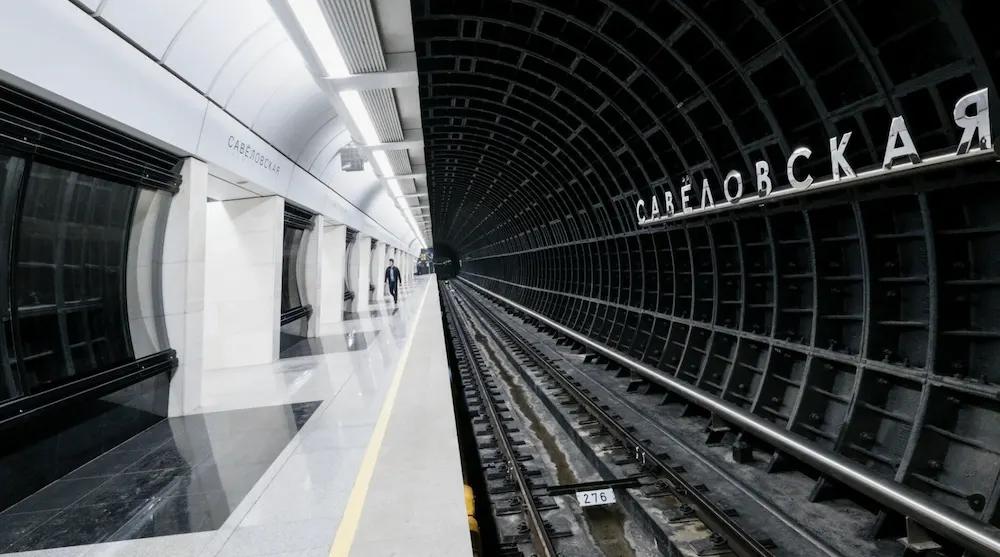
2. Savelovskaya (BCL) (Industrial Chic) This station is unapologetically brutal and raw—and that is why it looks so cool. Instead of covering the tunnel walls with marble, the architects decided to leave the cast-iron tubing and concrete skeleton exposed, painting it a deep graphite black. It feels like you are standing inside the belly of a massive machine or the Death Star. It’s a "museum in the rough" that shows you exactly how the subway is built.
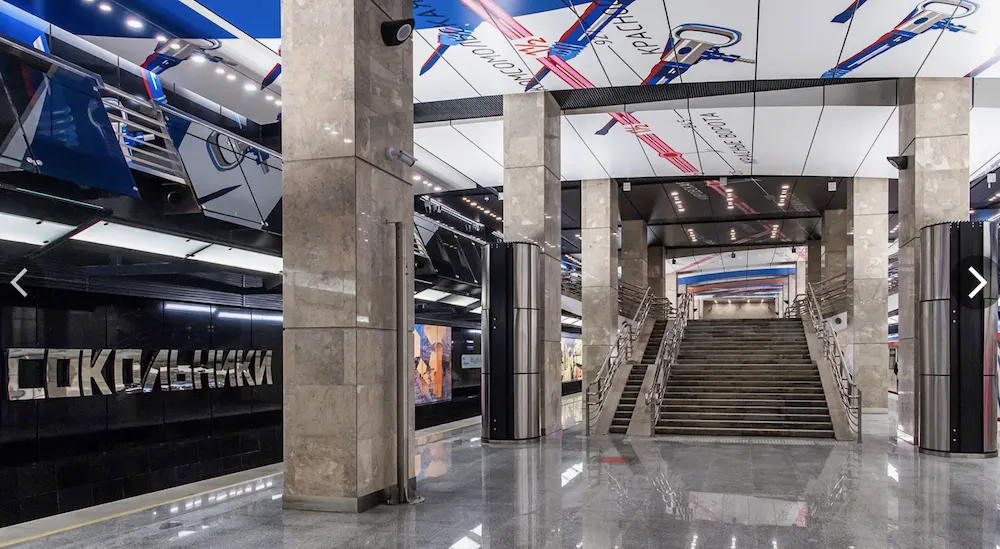
3. Sokolniki (BCL) (The Constructivist Tribute) This station is a massive nod to the 1930s Soviet avant-garde and the first metro builders. The design uses bold reds, blacks, and geometric shapes inspired by the art of Malevich and El Lissitzky. The ceiling features huge, graphic panels that look like retro propaganda posters brought to life with modern LED technology. It’s a perfect blend of history and high-tech.
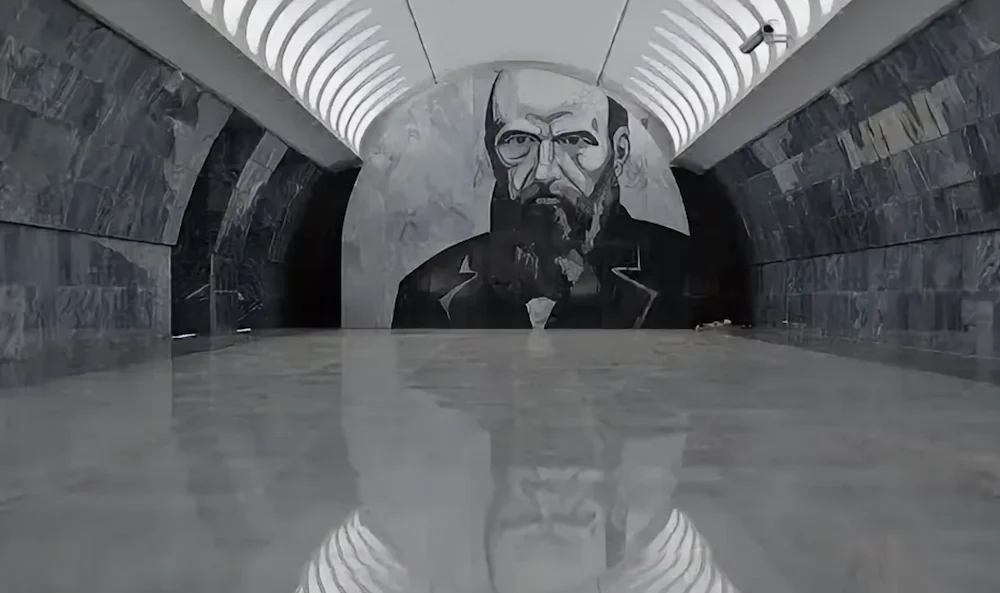
4. Dostoevskaya (The Tragic Masterpiece) This is arguably the most dramatic and atmospheric station in the world. The walls are lined with high-contrast black and white marble, depicting intense scenes from Dostoevsky’s novels like Crime and Punishment and The Idiot. It is moody and shadowy—yes, you can literally see Raskolnikov with an axe on the wall—but it is hauntingly beautiful.
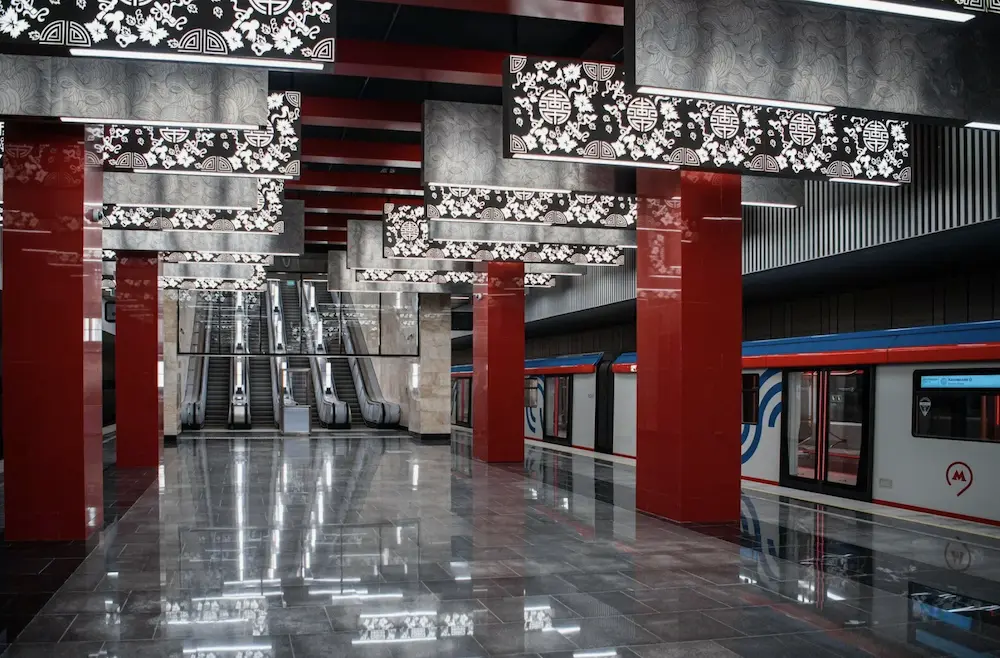
5. Michurinsky Prospekt (The Blooming Garden) This station is unique because it was built in collaboration with a major Chinese construction company, and you can see the influence. It features bright red pillars (a nod to Chinese culture) combined with illuminated panels of fruits and flowers (a nod to the biologist Michurin). The station has a panoramic glass wall overlooking a park, which is extremely rare for a subway station.
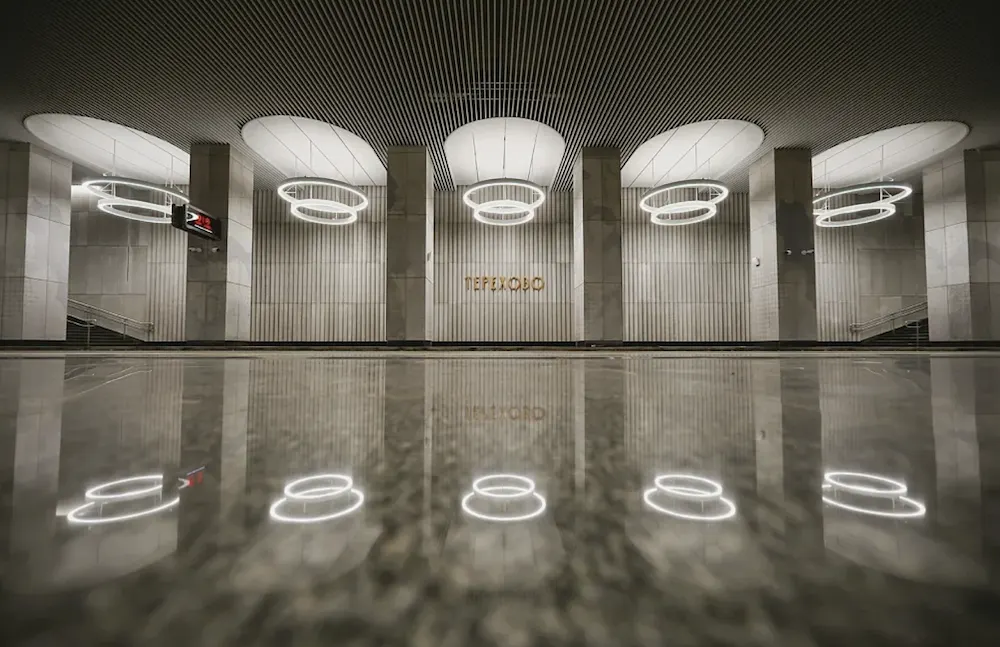
6. Terekhovo (The Void) Walking into Terekhovo feels like stepping into a concept art piece for a space colony. It is incredibly minimalist, made of light grey concrete with almost no sharp corners. The columns are decorated with digital-print silhouettes of people that glow with soft LED light, making the whole station feel like a futuristic dream.
Myths, Legends, and Hidden Easter Eggs
If the marble halls are the "Face" of the Moscow Metro, then this section is its "Soul." When a system is this deep and this old, it inevitably breeds legends. Some are cute traditions, others are conspiracy theories, and a few are straight-up ghost stories.
Here is what you need to look out for (and what you should be afraid of).
The Magic Dog of Ploshchad Revolyutsii: We mentioned the bronze statues earlier, but you need to know the rules. You will see people obsessively rubbing parts of these statues. It’s not random—it’s a strict ritual.
- The Dog’s Nose: If you have an exam coming up or need quick luck, rub the nose of the border guard’s dog. It is so polished it shines like gold.
- The Dog’s Paw: If you are looking for love or a new relationship, shake the dog’s paw.
- The Rooster: Whatever you do, do not touch the rooster held by the peasant woman. Legend says it brings bad luck and misery.
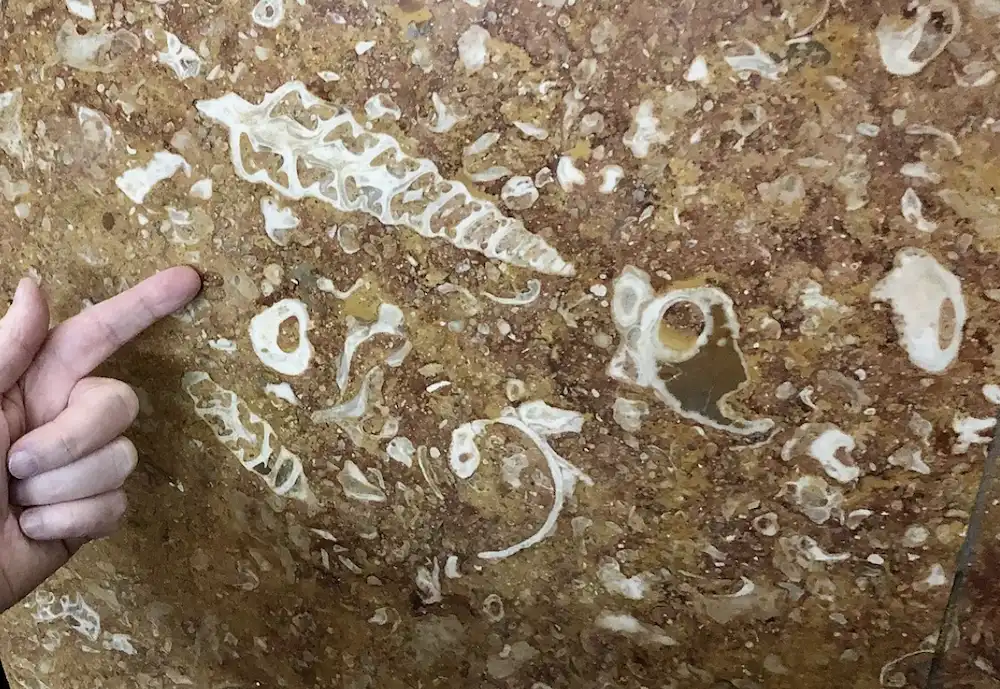
The Fossils in the Walls: This is a real-life Easter Egg. Since the metro is clad in tons of natural stone, it is full of ancient history—literally. If you look closely at the red marble walls of Park Pobedy or the beige columns of Dobryninskaya, you can spot ammonites, nautiluses, and sea lilies that are over 300 million years old. It’s a Jurassic Park right in the subway walls.
"Metro-2" or The Secret Government Bunker (D-6): This is the holy grail of Moscow urban legends. Rumor has it that parallel to the public subway, there is a second, secret network known as "Metro-2" (or D-6).
- The Theory: It was built by Stalin to evacuate the government. It supposedly connects the Kremlin, the FSB headquarters, and secret bunkers outside the city.
- The Evidence: In 1991, the US Department of Defense published a report referencing intelligence on "deep underground command posts and a special subway line for rapid evacuation."
- The Truth? Moscow officials usually play it cool: "We can neither confirm nor deny." But diggers and urban explorers swear they have seen sealed blast doors leading into dark tunnels that don’t appear on any map.
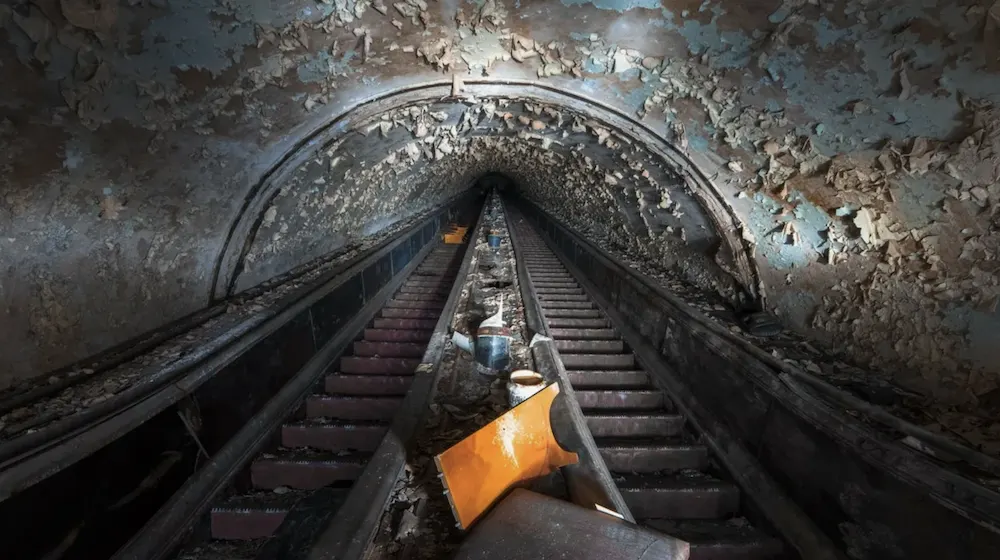
Ghost Stations: Yes, they exist. As your train speeds through dark tunnels, press your face against the glass. You might catch a glimpse of a "Ghost Station"—dusty, abandoned platforms that were closed decades ago.
- Old Pervomayskaya & Kaluzhskaya: These were temporary stations that are now used as depots or storage.
- Sovetskaya: This is a station that was planned but never opened. Legend says it was converted into a civil defense bunker instead.
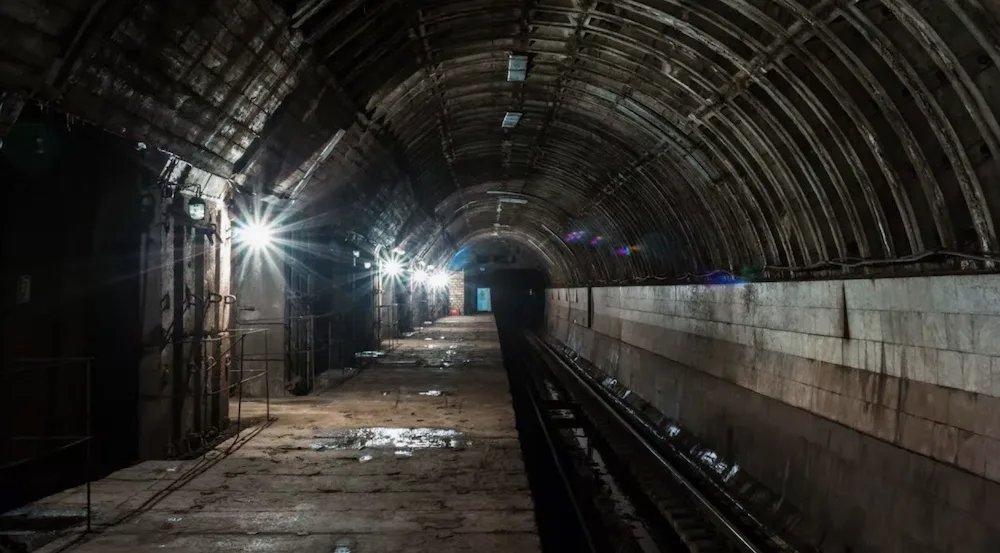
The Buried House of Borovitskaya: This sounds like pure fantasy, but it’s a popular local tale. When workers were digging the deep tunnels for the Borovitskaya station, they allegedly stumbled upon a void containing a perfectly preserved 18th-century merchant’s house—complete with furniture and dishes—that had been swallowed by the earth due to a geological sinkhole centuries ago. It’s Moscow’s version of a "buried Atlantis."
The Curse of Kitay-Gorod: The station Kitay-Gorod is notorious for eerie vibes. Why? It was built directly on the foundation of an ancient district and historic graveyards. Locals joke (or maybe they aren't joking) that the spirits aren't happy about the noise. This station has a reputation for minor "paranormal" technical glitches—escalators stopping for no reason or strange echoes in the tunnels. If your train gets delayed here... maybe don't blame the driver.
A High-Tech Miracle (The Practical Stuff)
Okay, enough about ghosts and mosaics. Let’s talk about why this system actually works. If you come from Europe or the US, the efficiency of the Moscow Metro will give you a legitimate culture shock.
The "90-Second" Rule: In New York or London, if you miss your train during rush hour, you might be standing on the platform for 5, 10, or even 15 minutes, sweating and checking your watch. In Moscow, if you see the train doors closing, you don't run. You don't even stress. Why? Because the next train is coming in 80 to 90 seconds.
- The Record: In 2023, the Moscow Metro set a world record for the shortest interval between trains for a non-automated system.
- The Reality: It is a conveyor belt of people. By the time the tail lights of one train disappear into the tunnel, you can already see the headlights of the next one approaching. It is relentless efficiency.
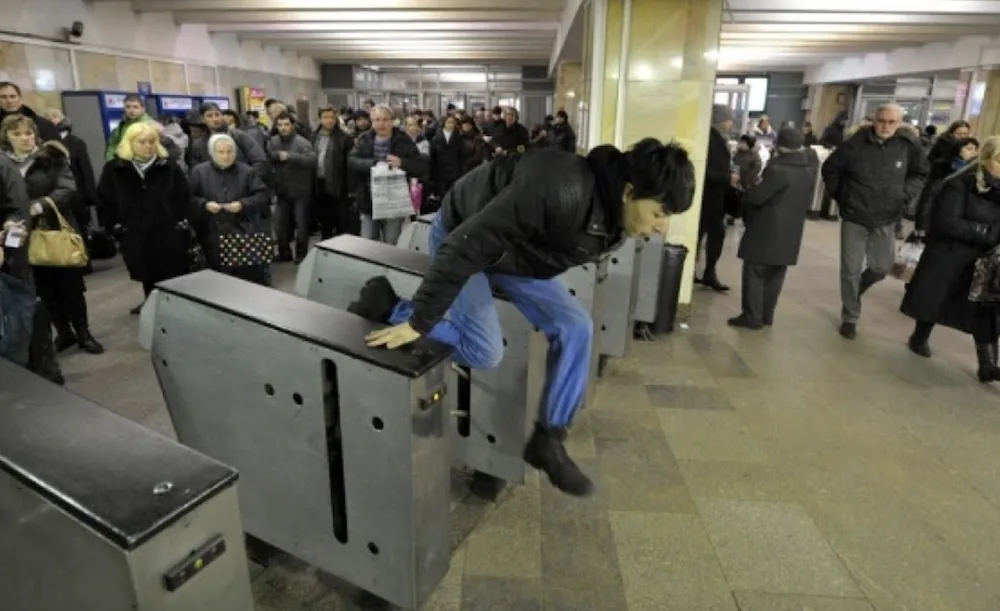
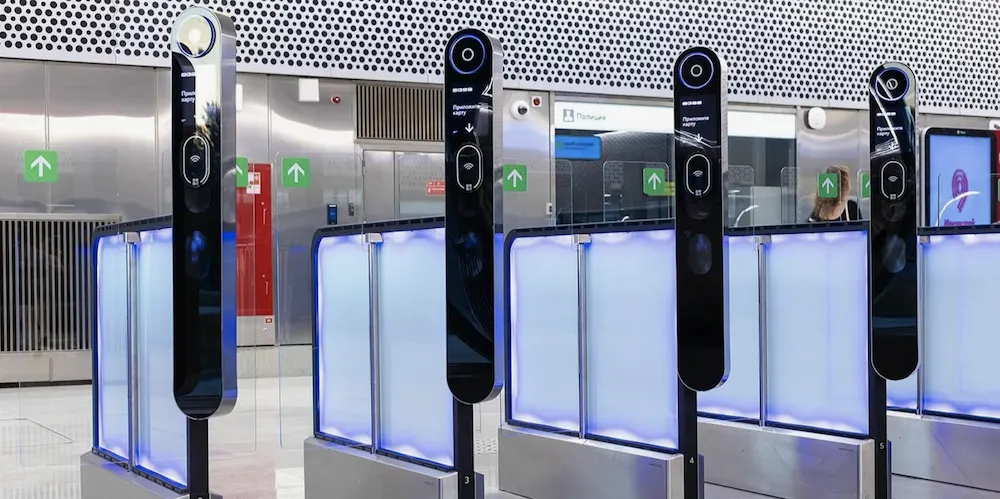
The "Cyberpunk" Entry: Old-school travelers used to be terrified of the Soviet turnstiles. They were notorious mechanical traps that would slam shut on your legs if you tried to sneak through. They were scary. Today, the turnstiles are scary for a different reason: they are incredibly high-tech.
- FacePay: You don’t need a ticket. You don’t even need your phone or credit card. You can literally just look at the camera, and the gates open. It’s called FacePay (biometric payment). It feels completely futuristic—you are the ticket.
- Connectivity: In most world subways, you lose your cell signal the moment you go underground. Here, there is high-speed free Wi-Fi in the tunnels. You will see locals streaming movies, playing online games, or Facetiming without a single lag while moving at 80 km/h deep underground.
The Spaceships: "Moskva-2024" Forget the noisy, rattling tin cans of the past. The new trains (series "Moskva-2020" and "Moskva-2024") feel like spaceships.
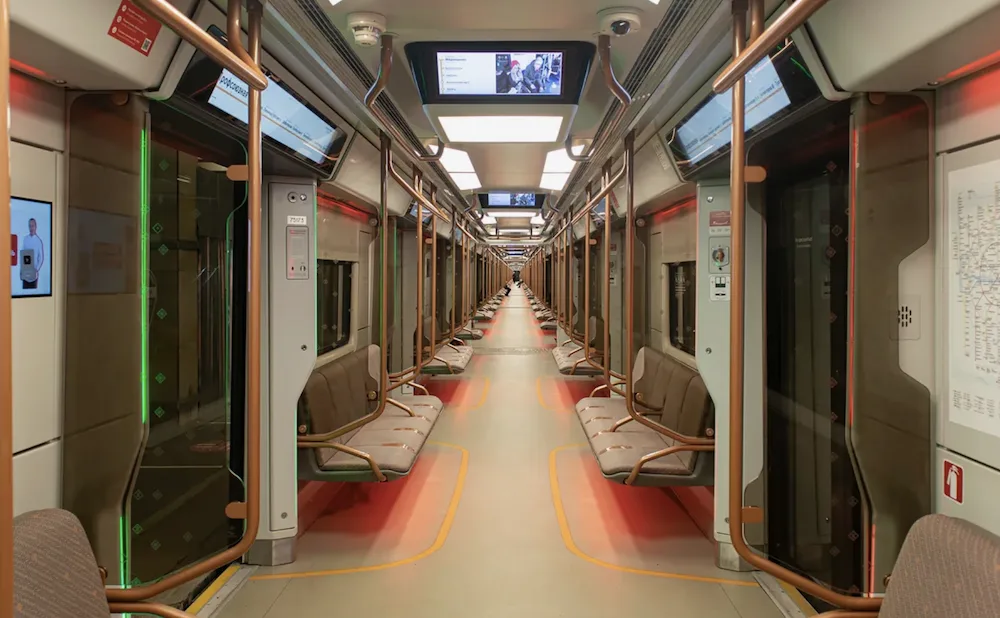
- Walk-through Design: There are no doors between cars. You can see from one end of the train to the other, making it feel huge and airy.
- Power Up: There are USB chargers everywhere. Not just a few in the corner, but built into the seats.
- Silence: They are shockingly quiet. You can actually have a normal conversation without shouting.
The Survival Guide: How to Navigate Like a Local
Okay, so you are sold. You want to see the underground palaces. But the Moscow Metro is massive, loud, and can be intimidating if you don't know the rules. Here is how to survive your first trip.
Rule #1: Get the "Troika" Card Do not stand in line to buy a single paper ticket every time. It’s a rookie mistake. Walk to a ticket machine (they have English menus) and buy a "Troika" card. It’s the Moscow equivalent of London's Oyster card.
- Why? It is significantly cheaper than buying single rides.
- Convenience: It works on buses, trams, and even the river boats. Plus, the card itself often features cool designs—a nice cheap souvenir to take home.
Rule #2:Look at the Floor (and the Ceiling) Navigating in a city where the alphabet looks like a secret code (Cyrillic) can be scary. But the Metro is surprisingly user-friendly.
- Color Coding: The lines are known by their colors (Red Line, Green Line, Brown Circle Line). If you can match colors, you can’t get lost.
- Floor Navigation: If you are confused in a transfer tunnel, look down. There are often huge colored arrows and signs right on the floor telling you where to go.
- The App: Download Yandex Metro. It works offline, calculates the fastest route, and even tells you which train car to sit in for the quickest exit.
Rule #3: Be Alert During Peak Times. Moscow rush hour (8:00–10:00 AM and 6:00–7:30 PM) is famously intense. It’s essentially a physical contact sport. While it’s an experience in itself, the density means you need to keep your wits about you. Watch out for pickpockets. In such tight crowds, it’s easy for things to disappear, so keep your phone and valuables in your front pockets or a zipped bag. If you can, save the sightseeing for 11:00 AM onwards—you’ll have space to breathe, take photos, and actually enjoy the architecture.
The Heartbeat of the City
At the end of the day, the Moscow Metro is more than just a transportation system. It is the pumping heart of the city.
It connects the suburbs to the center, the past to the future, and the harsh reality of a megacity to the dream of an underground paradise. It is a place where you can touch a 300-million-year-old fossil, ride a spaceship train, and stand in a baroque palace—all for less than a dollar.
You can spend days exploring the museums above ground, but I honestly believe the real soul of Moscow is hidden 50 meters below the asphalt. It is loud, it is fast, and it is absolutely beautiful.
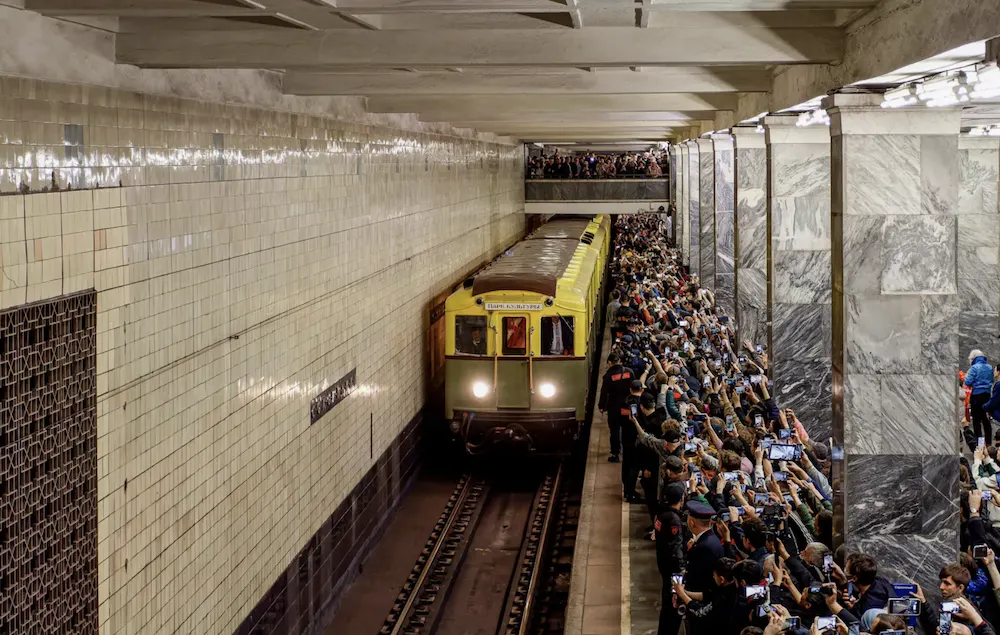
So, are you ready to go underground?
Read Next
- Loading recommendations...
